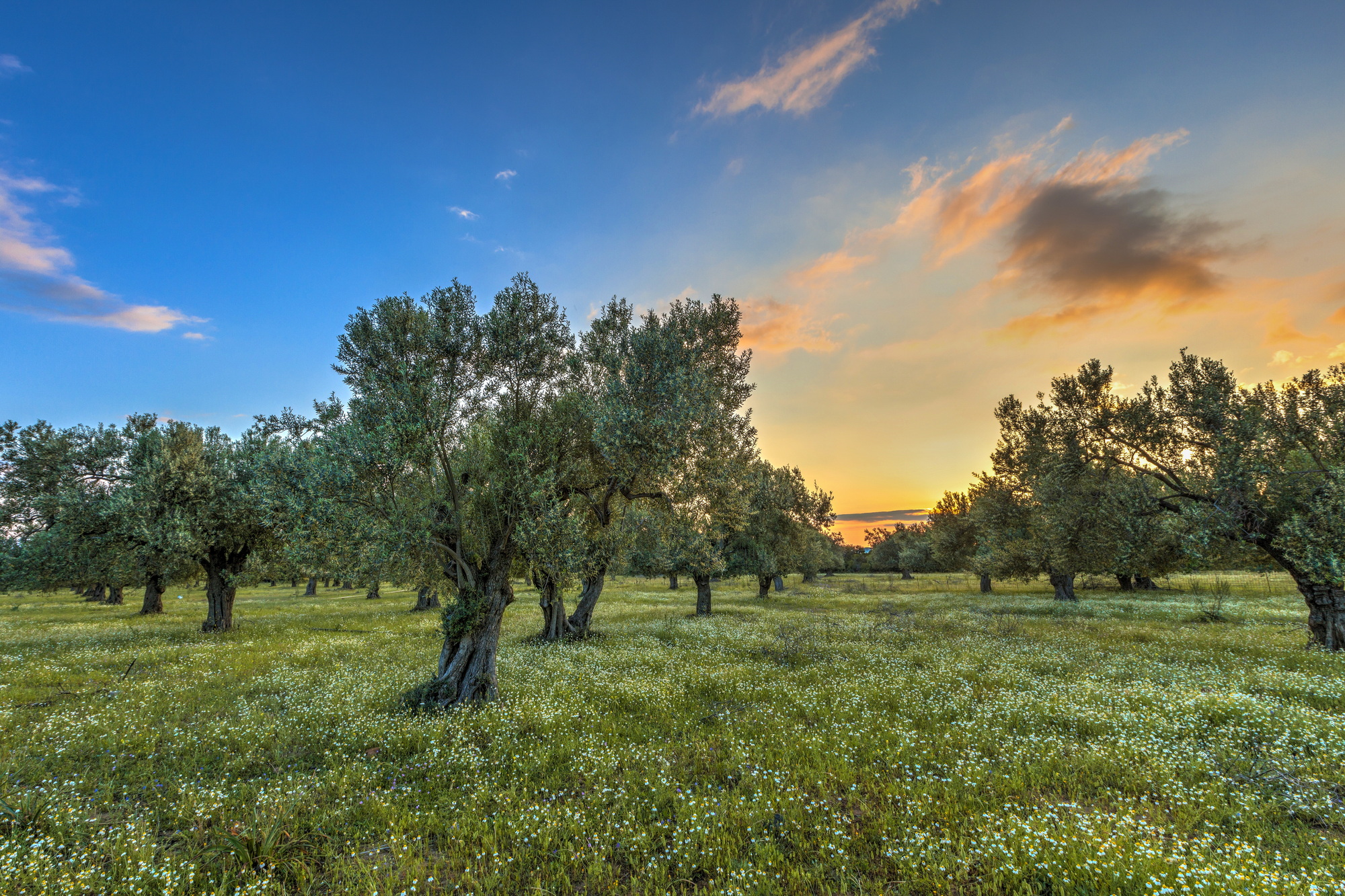
The history of olive oil is closely intertwined with that of the great civilizations of the Mediterranean. The first olive cultivations date back to over 6,000 years ago in the Middle East, in territories now corresponding to Syria, Palestine and Iran. From there, the olive tree gradually spread throughout the Mediterranean basin, finding its ideal habitat in the Italian, Greek and Spanish coasts.
The ancient Greeks considered oil a divine gift: according to mythology, the goddess Athena planted the first olive tree on the Acropolis, thus giving men a sacred food and a source of wealth. For the Romans, oil was indispensable in daily life: used in cooking, in spas for massages and beauty treatments, and even as fuel for oil lamps.
During the Middle Ages, olive growing survived thanks to the work of Benedictine and Cistercian monks, who cultivated olive groves in their convents and passed down ancient extraction techniques.
During the Renaissance, olive oil acquired an even higher value, becoming a symbol of refinement and well-being. Since then, the culture of oil has been increasingly valued, up to the present day, where it represents not only an essential element of the Mediterranean diet but also a product of excellence for our health.